As an Amazon Associate I earn from qualifying purchases.
Modern Wolf Traps
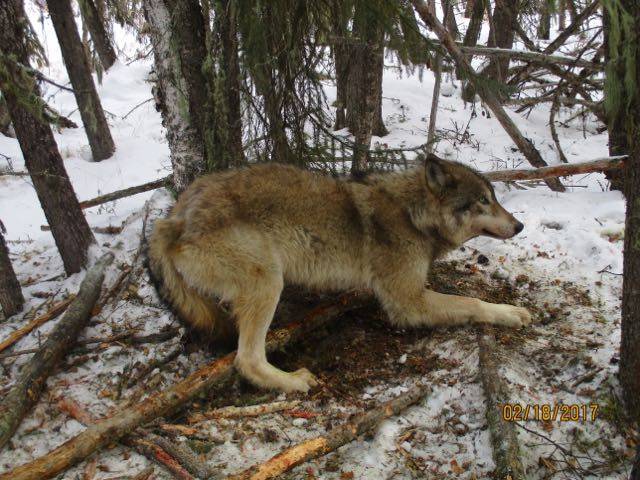
The modern wolf traps available today are as good as anything that has ever been available. The Newhouse 114 foothold was at one time considered to be the king of wolf traps. That isn’t the case any longer. Today we have a plethora of outstanding traps to choose from. In this post I will share some of my thoughts and experiences with some of the modern wolf traps I have used. A note of caution; its not advisable to set these large footholds until mid November when the bears have went into hibernation. The modern wolf traps available today are strong enough that they may hold a bear for a period of time. The last thing you want to do is walk up to a set and find a grizzly caught by the toes!
After a lifetime of matching wits with wolves I don’t their intelligence lightly. They will learn from a single experience. That fact can complicate things for a trapper. Since wolves rarely travel alone, other wolves will almost always witness a catch. Those wolves will then become much more challenging to trap. I’ve had them dig into the snow around a set trap and then flip it upside down so it’s harmless. Hard to believe, I know, but it happens. When things like that occur, you realize how intelligent these animals are.
Wolves have a sense of smell to rival the best hounds.
Most trappers know that canines generally have a good sense of smell, but wolves are different. Their sense of smell is so good it cannot be overstated. A biologist gave this example at a wolf trapping seminar a few years ago. When we get a pizza delivered, all we smell is the pizza, wolves on the other hand can identify every ingredient in that pizza, the pizza’s box, the person who cooked the pizza, and the delivery man. He went on from there, but you get the point. I learned long ago that fooling a wolf’s nose is impossible. The best we can do is limit the scent we leave on traps and in areas around sets.
Time and numbers are a trapper’s best friend when harvesting wolves. Time will help with scent control. The longer a set is left out in the elements undisturbed, the less scent and human sign there will be. I could count on one hand the number of wolves I’ve caught in fresh sets. Trappers will notice an upward trend in catch rates in sets left out and undisturbed for extended periods. Success rates are also closely related to the number of traps you have out. Like any other species, the more traps you have set, the better your chances of success.
When I first started trapping in northern British Columbia, the Cree trappers primarily used Victor #4 long springs for both wolf and beaver. In those days, the 114 and the smaller 4-1/2 Newhouse were considered the best wolf traps on the market. Unfortunately, even back then, they were hard to find and too expensive for most trappers. The Victor #4 is a good trap but won’t handle severe conditions like the Newhouse traps.
Modern Wolf Traps
Today, it’s a different story. With wolf seasons opening in some western states in recent years, the demand for good wolf traps is rising. Trap manufacturers have responded to the increased demand with some of the best wolf traps ever produced. Today, trappers have more true wolf traps to choose from than ever before. Some models sell for less than $40 apiece, making them quite affordable.
Modern wolf traps are all solid and well-built traps. They will all serve you well. Still, there are some things you should consider before you go out and spend your money on new traps.
Local laws should be your first consideration. Some of the larger wolf traps may not be legal in your jurisdiction. My local trapping regulations list all the models by name that are legal for me to use, so it’s pretty simple. In other areas, a trapper might need to know some or all of the following: jaw spread, whether the trap has offset or padded jaws, and how the swivel is attached to the trap. Some models are also better suited to particular terrain and sets than others. These are all critical things to consider before you purchase news traps.
Long Springs vs Coil Spring Traps
Trappers can choose either coil or long spring traps when purchasing modern wolf traps. Both styles have advantages in certain conditions. There are more coil spring traps on the market, but the long springs available today are excellent traps. An example is the Sleepy Creek 4-1/2 long spring with offset jaws. This trap is one of the strongest I’ve ever used. The Livestock Protection EZ Grip No.7 is another excellent long-spring wolf trap.
Two disadvantages of a long spring trap are its size and speed. Since it has a larger footprint than a coil spring trap, it takes a bigger hole to bed it in. It is also slower than a coil spring trap. Long spring foothold traps shine in freeze/thaw conditions because they don’t freeze up like a coil spring can.
Longspring wolf traps can be more reliable in adverse conditions
During warm spells, water can build up in the coils of coil spring traps. If enough water builds up around the springs and freezes, a coil spring trap won’t work. A long spring trap will still fire even if the bottom of the springs freezes, giving it an advantage in some locations.
I have a section of trail that is a perfect example. A small spring on the hillside continually weeps under the snow all winter. The water works its way down onto my trail, slowly causing a layer of ice to build up throughout the season. I learned the hard way that long spring traps were the better choice along this section of the trail.
Wolf traps generally have a jaw spread between seven and nine inches when set. An Alaskan trapper once told me it’s easier to get a wolf to step into a 9-inch circle than a 7-inch circle. There’s some truth to that. In some locations, a trap with a large jaw spread will give you an edge you wouldn’t have with a smaller trap, but the opposite is also true. There are locations and sets where a smaller trap is the better choice.
Alaskan #9 Wolf Trap
The largest available wolf traps are commonly known as the big number 9s.
There are four models trappers can choose from, and they all have a jaw spread close to nine inches across when set. The oldest of the bunch is the Alaskan #9. This tap needs no introduction. Designed by a trapper in Alaska, this coil spring trap has been the go-to trap for serious wolf trappers for three decades. With fur coil springs and a traditional dog and pan system, this trap will work in the worst conditions on the planet.
Bridger Brawn #9
The Bridger Brawn #9 is another large wolf trap. This dogless trap is available with padded or laminated offset jaws. A unique spring design incorporates an acceleration ramp, making the Bridger Brawn #9 one of the fastest wolf traps on the market.
Koro #9 Wolf Trap
Designed by James Korosil, the Koro #9 is manufactured in Canada. I was involved in the initial testing of this trap, which is an absolute powerhouse. Like the Brawn, the Koro is also a dogless design. When set, the Koro has an 8.5 x 9-inch jaw spread, and the jaws are hardened, wear-resistant steel. Grade A bolts with stover lock nuts secure the jaws to the frame. They make the music wire springs in-house. I have a lot of experience with the Koro wolf trap, and to date, I’ve never seen one damaged in any way by a wolf.
No BS Extreme Wolf Trap
The No BS Extreme trap is a relative newcomer in the lineup of large footholds suitable for wolves. No BS Xtreme traps are handmade in the USA and have gained a large following in just a few years for a good reason. They are tough, no-nonsense traps featuring ¼ inch-thick steel frames and jaws; these traps are a dogless design with a pan block welded onto the inside of the jaw. The pan on the No BS wolf trap sits below the jaws, which makes this trap one of the easiest traps to bed. The NO BS Extreme wolf traps have an 8.5-inch jaw spread, and the pan features a night latch. Bolts hold the jaws in place and eliminate any chance they will pop out, and both levers and jaws are heat-treated.
You can buy these traps confidently; NO BS traps are built like tanks and will last a lifetime.
One advantage of the large modern wolf traps is their ability to come up through the snow. They will reliably catch wolves even when covered with up to a foot of snow. I regularly leave them undisturbed for weeks because I know they will work in those conditions. The disadvantage of the larger traps is expense; trappers can expect to pay $100 or more per trap.
Compact Wolf Traps
Smaller wolf traps like the Bridger #5 and the MB 750 are more affordable and have some advantages over the larger traps. A trapper can buy two or three smaller traps for the price of one of the big number 9s. When I started targeting wolves seriously, I only used the larger traps. They worked as expected for most of my sets, but sometimes, I wished for a trap with a smaller footprint. A natural trail set is a good example.
Wolves will start traveling in a single file when the snow gets deep. The trails they make look like narrow troughs that wind across the landscape. While traveling these trails, each wolf will step in precisely the same spot. This makes it easy to place a trap where it needs to be. Small traps like the MB-750 or Bridger #5 are much easier to bed in these narrow trails than the larger traps.
Bridger #5 Alaskan Modified Wolf Trap
The Bridger #5 Alaskan is one of the most affordable wolf traps today. The original #5 is a good trap, but the Alaskan-modified trap is even better. Some improvements include a thicker dog with a night latch, a spring keeper that holds the 4-coil springs in place, and a steel spacer between the pan posts that allows you to tighten the pan tension. The Br dger #5 has a 7-1/4-inch jaw spread, laminated ¼ offset jaws, and comes ready to use with a welded baseplate and heavy-duty wolf swivel.
MB750 Wolf Trap
The MB750 is another trap that needs no introduction. This trap has been around long enough to prove itself in some of the harshest climates on the planet. An affordable trap made in Minnesota, the MB750 has caught more wolves than any of the modern wolf traps.
A friend of mine bought twenty-four of these traps a decade ago. He targets arctic wolves up on the open tundra in the North West Territories. I don’t know how many wolves he’s caught with those MB750s, but he has certainly caught his share. The MB 50 wolf trap has a heavy frame and thick music wire springs. Trappes can choose ¼ or 3/8 offset jaws with 3/16 thick flat laminations. A heavy-duty wolf swivel with welded rivets coming off the D ring baseplate and five MB#5 chain links is standard.
Wolves use large frozen lakes and rivers as travel routes during winter. The elements create a challenging environment for any modern wolf trap in open areas like these. The larger wolf traps are the best choice for this type of terrain. The fact that they have the power to come up through a lot of snow means that you don’t have to disturb your sets after every storm. Not having to rework sets as often is a big advantage because there is no chance any fresh scent will be left behind. With some planning, you can even check these sets without getting close to them. I often carry binoculars for that very purpose.
Chains and Drags
Wolves are big, strong animals, so setting your traps up properly is important. Eight to ten feet of chain with at least one crunch-proof swivel is necessary. An extra swivel is a good idea, especially in areas with thick underbrush. Heavy three-prong drags make things easier, but a good heavy pole also works.
I wax and dye my wolf traps every couple of years to keep them in tip top shape. The wax will protect your traps from the elements and enable them to work more efficiently. A waxed foothold is much faster than bare traps.
Modern wolf traps give trappers both quality and affordability. This is a big advantage, and if I’ve learned anything in all my years trapping wolves, it’s to take any advantage I can get.
Amazon and the Amazon logo are trademarks of Amazon.com, Inc, or its affiliates.